
Planning Your Hawaiian Vacation
Nine Things to Keep in Mind When Planning Your Hawaiian Vacation
Hawaii is one of those destinations that people dream about for years.
Maybe it's the beaches, the waterfalls, the volcanoes, or simply the idea of slowing down and spending time somewhere truly beautiful. Whatever draws you to the islands, one thing I've learned from helping clients plan Hawaiian vacations is that a little preparation goes a long way.
Planning a trip to Hawaii isn't difficult, but it is different from planning a typical beach vacation. Each island has its own personality, activities vary by location, and there are several important decisions that can significantly impact your experience.
As a travel advisor who specializes in Hawaii, these are some of the first things I encourage my clients to think about when we begin planning.
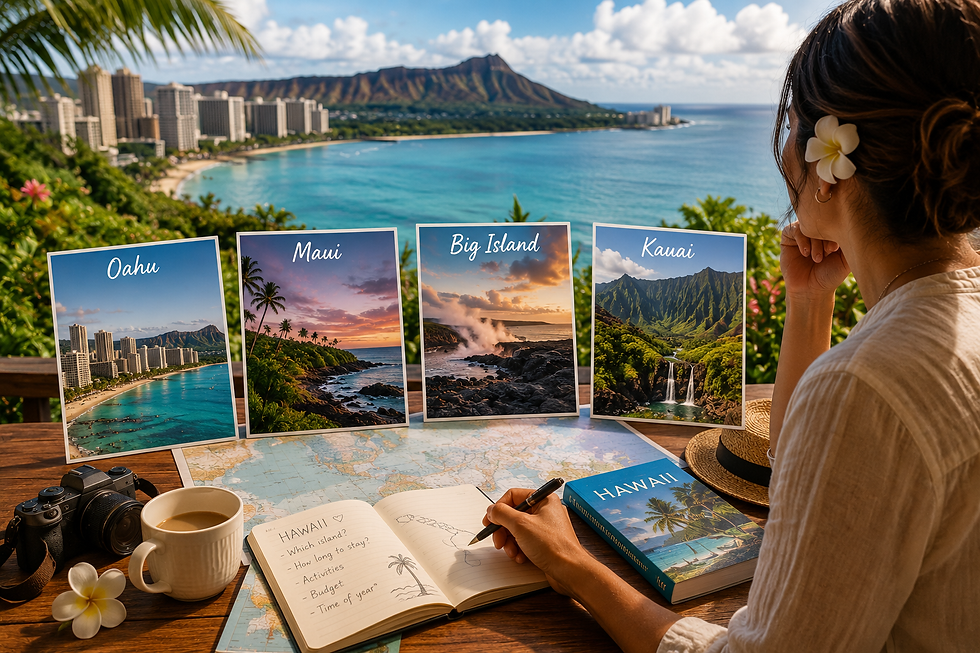
1. When Do You Want to Visit Hawaii?
One of the first questions I ask clients is surprisingly simple:
"When would you like to go?"
The answer matters more than many people realize.
Different times of year offer different experiences throughout the islands. If seeing humpback whales is on your wish list, timing becomes very important. If snorkeling, surfing, or spending as much time as possible in the water is your priority, that can influence your travel dates as well.
The good news is that Hawaii is a fantastic destination year-round. The key is identifying what experiences matter most to you and then selecting travel dates that align with those goals.
Sometimes a quick conversation about your interests can make this decision much easier.
2. How Long Should You Stay?
If you're traveling all the way to Hawaii, my advice is simple: give yourself enough time to enjoy it.
Flights from the West Coast often take six hours or more. For travelers coming from the East Coast, travel days can become quite lengthy, especially when layovers are involved.
Because airfare can be a significant investment, I always encourage travelers to spend enough time on the islands to truly experience them rather than rushing through a short trip.
You'll also want to consider the time difference. Some travelers adjust quickly, while others need a day or two to fully settle into island time.
Adding an extra day or two often makes the entire vacation feel more relaxed and enjoyable.
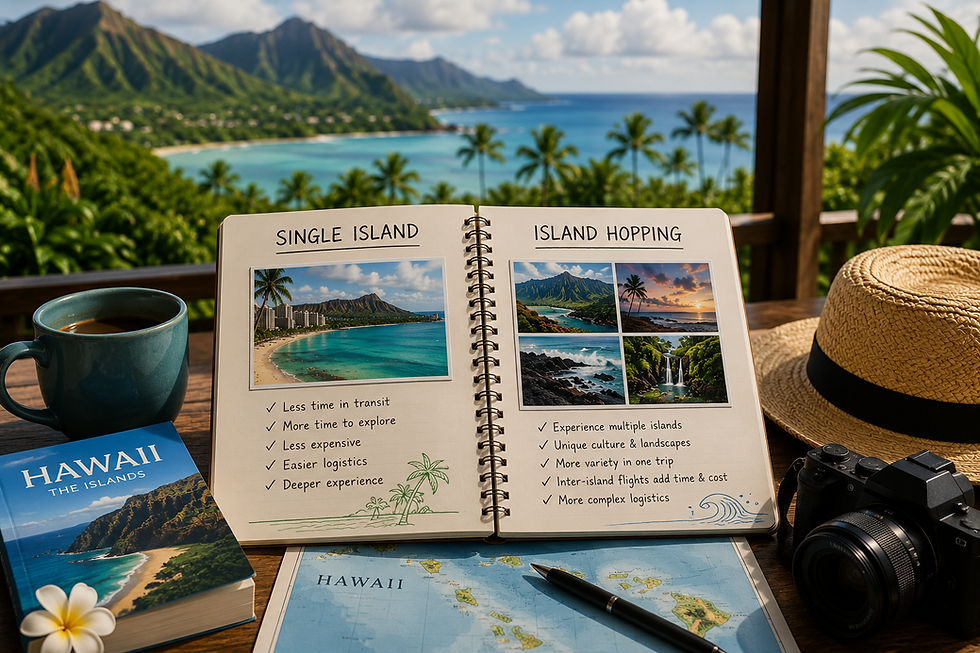
3. Should You Visit One Island or Multiple Islands?
This is one of the biggest decisions you'll make when planning a Hawaiian vacation.
Many travelers arrive with the mindset that they need to see everything in one trip. While I understand the excitement, I often encourage clients to move away from the "once-in-a-lifetime" mentality.
Trying to do too much can sometimes take away from the experience you're hoping to have.
Single Island Vacations
A single-island itinerary is typically simpler and more budget-friendly.
You won't need to worry about inter-island flights, additional transportation costs, or losing valuable vacation time while moving between islands.
Staying on one island also allows you to explore beyond the highlights and experience the destination at a deeper level.
Island Hopping
On the other hand, island hopping allows you to experience the incredible diversity of Hawaii.
Each island feels different. The landscapes, atmosphere, activities, and even local culture vary from island to island.
If experiencing that variety is important to you, island hopping can be a wonderful option.
Ultimately, your decision will usually come down to:
Budget
Vacation length
Activities and experiences that matter most
There isn't a right or wrong answer—just the option that best fits your travel style.
4. What Island Fits Your Style?
One of my favorite parts of planning Hawaii vacations is helping clients choose the right island.
While all of Hawaii is beautiful, each island offers something completely different.
Oahu
Oahu is often the best fit for travelers who enjoy having lots of options.
Think beautiful beaches, incredible dining, shopping, nightlife, cultural attractions, and historic sites all in one destination.
Honolulu and Waikiki offer a vibrant energy that many travelers love, while the North Shore and other areas provide a more laid-back experience.
Maui
Maui is often what people picture when they imagine Hawaii.
Beautiful beaches, luxury resorts, waterfalls, rainforests, volcanoes, scenic drives, and incredible sunsets all come together here.
It's a wonderful choice for travelers who want a little bit of everything.
Hawaii Island (The Big Island)
The Big Island offers some of the most diverse landscapes in the state.
Volcanoes, black sand beaches, coffee farms, waterfalls, lava fields, and multiple climate zones make it a paradise for nature lovers and adventure seekers.
It's unlike anywhere else in Hawaii.
Kauai
Known as the Garden Isle, Kauai is famous for its lush landscapes and dramatic scenery.
If you love hiking, photography, waterfalls, outdoor adventures, and a slower pace, Kauai may be exactly what you're looking for.
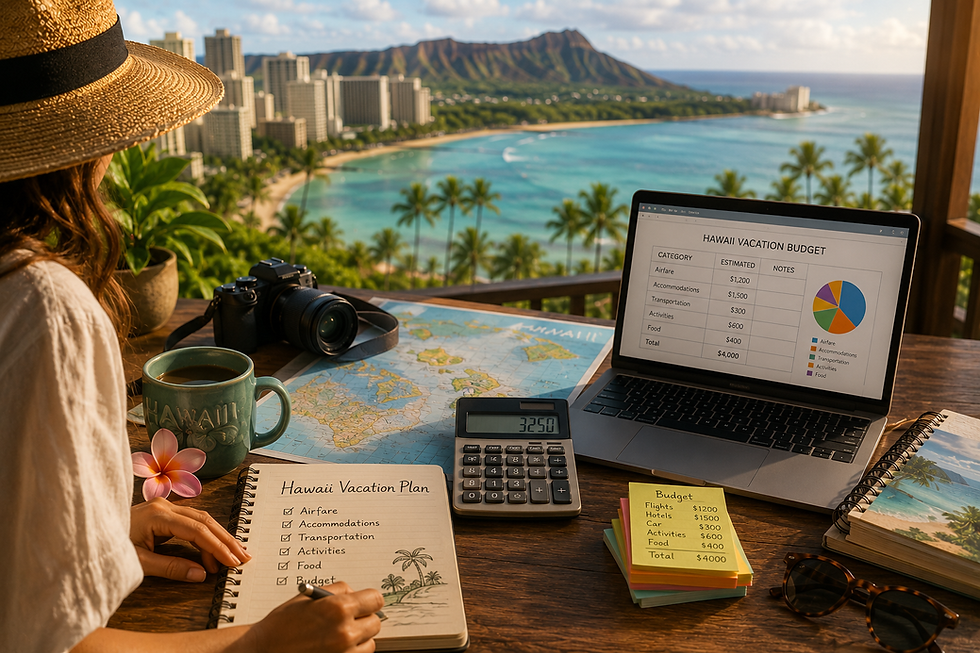
5. What Is Your Budget?
A realistic budget is one of the most important parts of planning a successful Hawaii vacation.
I encourage clients to think about their budget in several categories:
Airfare
Accommodations
Transportation
Activities
Food and beverages
One thing that surprises many first-time visitors is that Hawaii can be more expensive than they expect.
Because everything must be transported to the islands, costs for food, gas, and other everyday items are often higher than on the mainland.
Having a general budget in mind from the beginning allows us to create a vacation that feels exciting rather than stressful.
6. Start Planning Early
If Hawaii is on your radar, don't wait until the last minute.
Flights and accommodations are typically the first pieces of the puzzle, and securing them early often provides the best selection and pricing.
Planning early also gives you more flexibility.
Many clients find that spreading payments over time feels much more manageable than paying for everything at once.
It can also create opportunities to add experiences, upgrades, and special touches that may not have been possible otherwise.
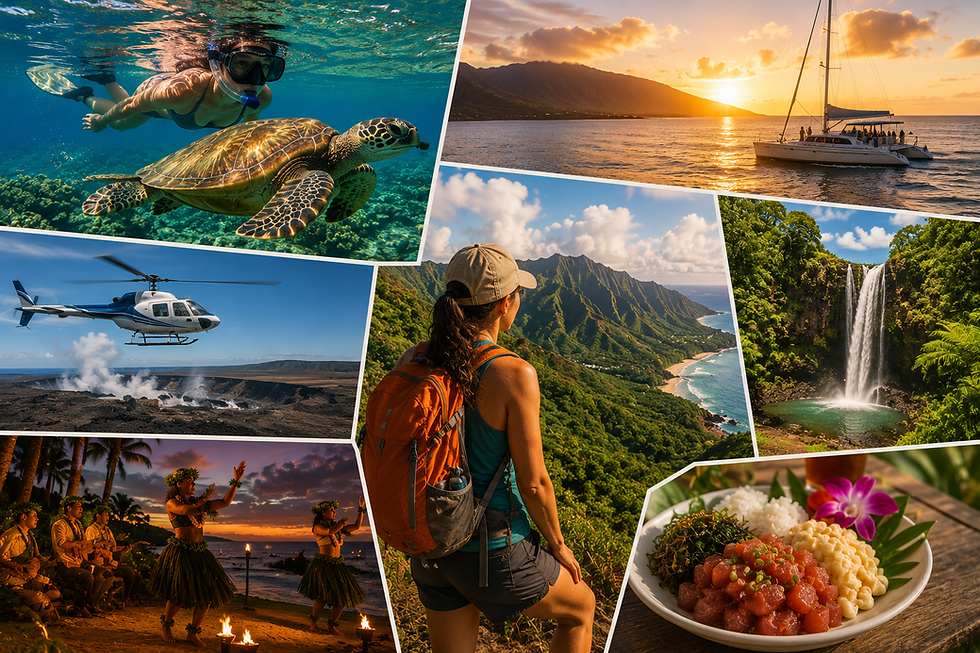
7. What Activities Do You Want to Experience?
The activities you choose can have a huge impact on your overall vacation.
Luaus, snorkeling excursions, helicopter tours, whale watching trips, hiking adventures, cultural experiences, and sunset cruises all require planning.
While some activities may still be available after you arrive, many of the most popular experiences fill well in advance.
Planning these early not only helps secure availability but can also help you stay within your overall vacation budget.
8. What Should You Pack?
Packing becomes much easier once you know what you'll be doing.
A traveler planning daily hikes will pack very differently than someone spending most of their vacation at the beach.
If snorkeling is a major part of your trip, you may even prefer bringing your own gear rather than renting it.
One of the advantages of working with a travel advisor who has personally traveled throughout Hawaii is that I can share recommendations based on firsthand experience—including products I actually use and pack myself.
9. How Will You Get Around?
For most Hawaii vacations, I typically recommend renting a vehicle.
Having your own transportation gives you flexibility and allows you to explore at your own pace.
When selecting a rental vehicle, be sure to think about both passengers and luggage. It sounds simple, but it can make a big difference.
While rideshares and transfers are available, they can often be more expensive than travelers expect, so it's important to factor those costs into your budget if you decide not to rent a car.
And if you do rent a vehicle, don't forget to include fuel costs when estimating your overall expenses.
Why Working with a Hawaii Travel Advisor Matters
If you've never been to Hawaii before, there can be a lot of moving pieces.
Which island is right for you?
Should you island hop?
How long should you stay?
Which activities are worth your time and budget?
These are all questions I help clients answer every day.
My goal isn't just to book a trip. It's to help you create a vacation that matches your interests, travel style, and expectations.
Every island offers something different, and understanding those differences can make the difference between a good vacation and an incredible one.
Final Thoughts
Hawaii is more than a destination.
It's a collection of islands, cultures, landscapes, and experiences that can mean something different to every traveler.
Taking the time to think through these nine considerations before you book will help you build a trip that feels personal, intentional, and truly memorable.
And honestly, that's my favorite part of what I do—helping clients turn their Hawaii dreams into real experiences and then seeing the memories they bring home.
If Hawaii is on your list and you're not sure where to start, let's have a conversation. Sometimes the hardest part is simply deciding which island to visit first. 🌺
Tropical Sunset Travel, LLC is an expert travel agency based in Charleston, South Carolina. We book travel for couples, families, and groups to travel to destinations around the world. No matter what type of vacation you are dreaming of, our travel services can assist you. We also feature top vacation package options to help inspire you! The Tropical Sunset Travel Blog is a great place to learn about top destinations and vacation options. Please visit our website for agency information and more. Please follow us on Facebook and Instagram for more travel information and deals!
Comments